Beyond the Buzzwords: What a Day of Honest Conversation Reveals about Diversity in Pensions
On May 7th, 50 pensions professionals gathered at the offices of Burges Salmon LLP in London and online for a joint industry event on diversity, equity and inclusion in pensions — hosted by seven cross-industry groups including: Diversity in Pensions, Pensions Equity Group, NextGen, O:Pen, and the APPT. What emerged was not a celebration of progress, but something more useful: a clearer map of where change actually happens, and what to do when resistance arises.
The Keynote: Representation Is Not Enough
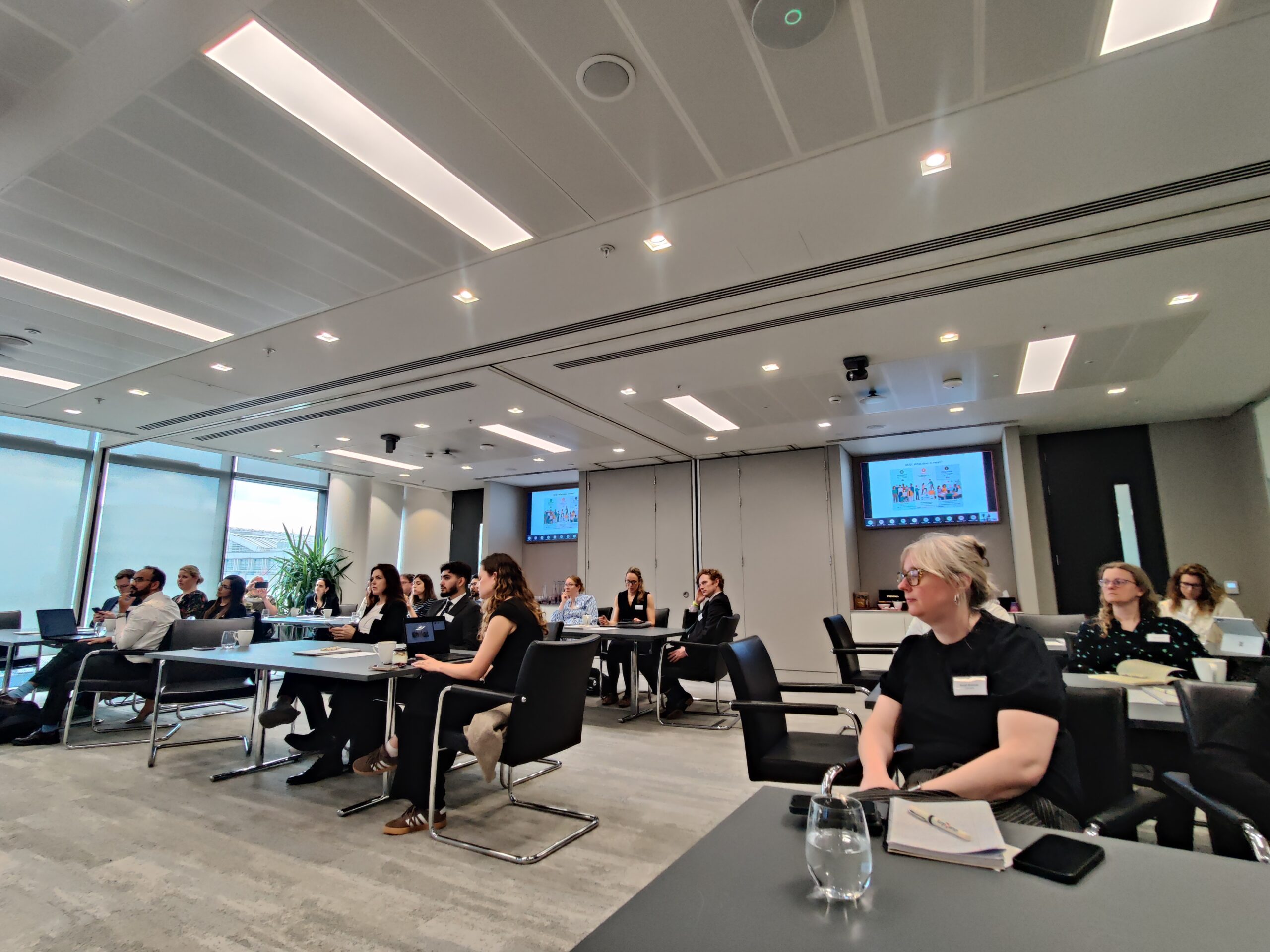
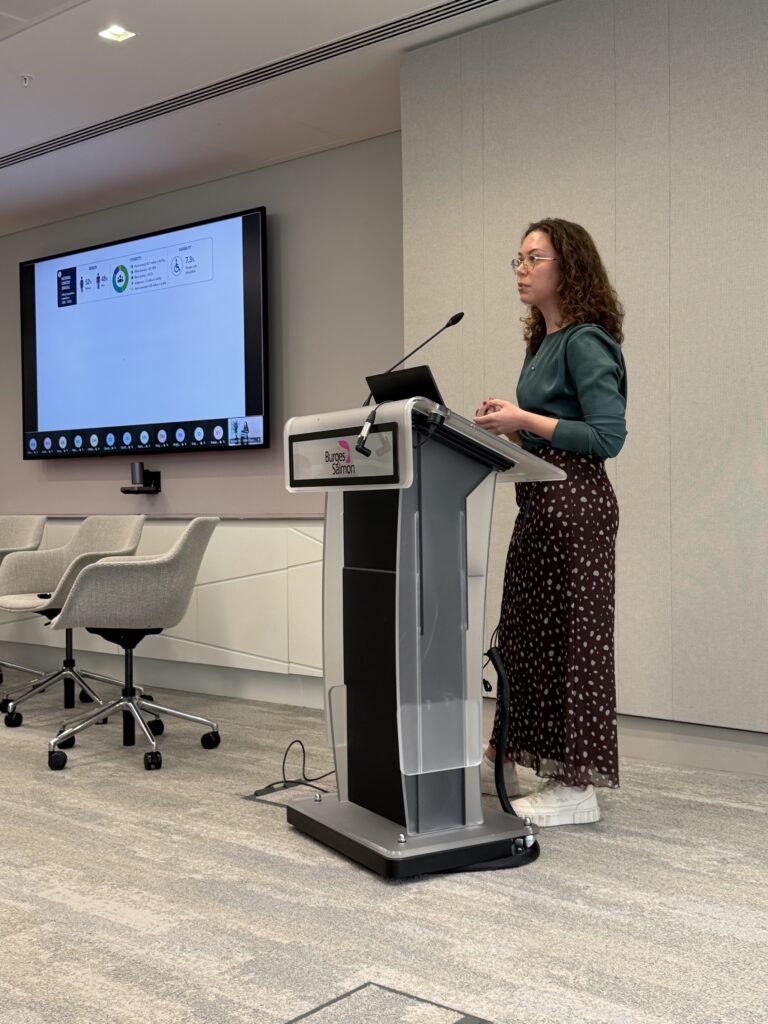
After Jenny Davie from the Pensions Regulator welcomed all participants, Bruna Bauer of Investors for Purpose opened the morning with a clarifying distinction that set the tone for everything that followed. Diversity, she argued, is about representation. Equality is about fairness. Inclusion is about belonging. The three are related but not interchangeable — and confusing them is itself a barrier.
Her point was illustrated with data from Brazil: a company whose workforce broadly reflected the national population, whose middle management was reasonably diverse, and whose senior leadership was neither. This compression at the top is not a Brazilian phenomenon. In the UK, Bauer noted, CEOs are disproportionately male — and disproportionately named James, Robert, William or Andrew.
The barriers, she suggested, operate at two levels. Macro barriers are structural: informal networks of power, gendered definitions of leadership, unequal care responsibilities, and the persistent assumption that DEI is a women’s issue. Micro barriers are personal: imposter syndrome, confidence gaps, and the small daily inequities — being talked over, being interrupted, having your idea credited to someone else — that accumulate into a clear signal about whose voice counts.
The Panel: Four Perspectives on Breaking Barriers
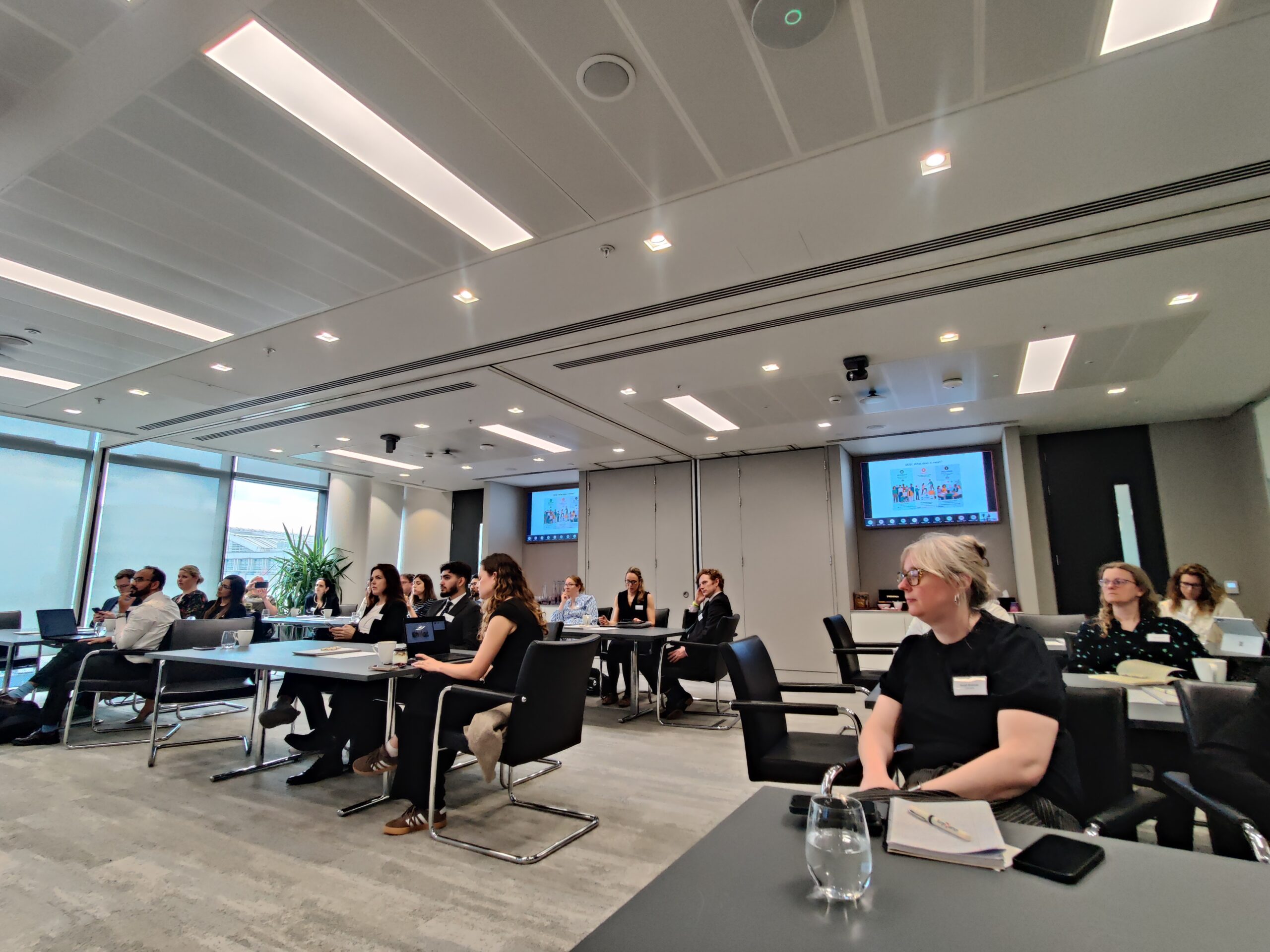
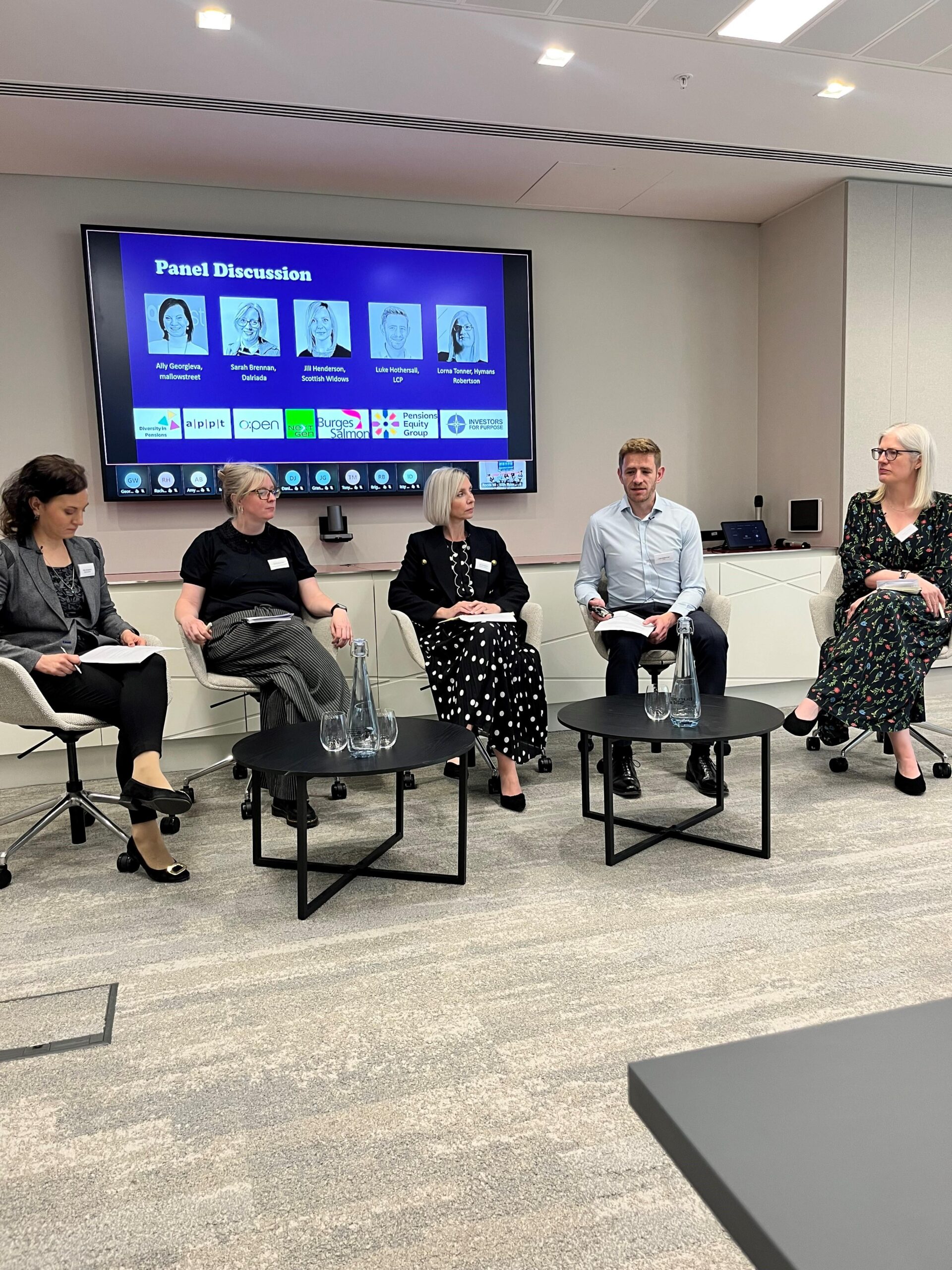
With Ally Georgieva from mallowstreet as moderator, a panel discussion brought together four voices from across the ecosystem — an adviser, a trustee chair, a head of DEI at a large employer, and a pensions provider — each operating at a different scale, yet describing a version of the same problem.
Luke Hothersall described how LCP had been looking for new ways to broaden engagement with DEI-related topics. The response was to focus on empathy and building psychological safety by bringing in expert, external speakers to talk about their lived experience of sensitive topics ranging from Islamophobia to the challenges of mid-life. The effect was not just broader attendance but renewed energy, with the conversations from the formal sessions rippling outward across the firm. Luke also shared some ideas on the practical ways in which he embeds inclusion in his consulting approach, for example asking clients about accessibility requirements at the start of any engagement and gathering participant input before meetings, rather than in them, to ensure everyone is given the opportunity to participate and share their opinions and questions.
Sarah Brennan from Dalriada Trustees, a professional trustee and chair, shared thoughts on dominant voices and challenging behaviours, noting this being a barrier to quieter voices speaking up in addition to the impact on the decision making process and efficiency of trustee boards. Bringing the human element to the table, Sarah discussed the impact on self-confidence, noting that good team work and relationships with advisers can really help create a safer environment. She also shared views on authenticity and observing not only the room and those in it, but importantly yourself.
Lorna Tonner of Hymans Robertson identified the gap between goodwill and action. Senior leaders, she said, see both the business and moral case for DEI, but fear of saying the wrong thing and time constraints can make it difficult for them and others to know what they can do to maximise their impact and drive progress. She talked about the need to embed inclusion in everyday behaviour for everyone in the firm, not just a small group of people driving it — moving inclusion from programme to behaviour. Community groups within the firm have presented directly to the management board providing leaders with real-life stories and a human anchor for what they could do. The enabling condition, she noted, was not sponsorship in name only — it was senior partner champions who listened and then acted.
Jill Henderson of Scottish Widows brought the widest lens, trained on the members who are never in any of these rooms. The women’s financial resilience gap, she argued, is societal in origin but plays out directly in workplace pension outcomes. Pension teams are shrinking, which means the paternalistic employer model that once produced the best member outcomes is under strain, and providers increasingly need to step into that space. Normalising conversations about money — in workplaces where those conversations have never been normal — is part of that. Sometimes, Henderson observed, one person making the business case is enough to shift inclusion.
The Workshop: What to Do when People Push Back
After the panel, Angela Sharma of Taylor Wessing and Manpreet Sohal of the Independent Governance Group broke the room into groups of six or seven. What emerged from those conversations was less about inspiration and more about mechanics — specifically, how to keep inclusion moving when you encounter inertia or resistance.
Practices that were working included diversity champions who can listen to problems but also push through solutions, and also act as a platform for senior leadership to hear direct new ideas from junior team members. Other suggestions included embedding DEI topics into existing meetings and framing them as knowledge-sharing rather than initiatives, or using structured tasks to build empathy and deepen the understanding of a problem.
On resistance, the discussion was candid. Pushback — often framed as concern about positive discrimination — tends to come from those who feel the conversation is happening without them. The approach that worked: involve them. Ask the sceptic to review a communication, give feedback on language, identify what feels alienating. Getting someone to improve the message is more effective than asking them to accept it. Allies, too, have a role — not just in endorsing inclusion in the abstract, but in calling out specific behaviour in real time, which is easier when it’s happening to someone else.
The Speed Coaching: Where the Ripple Effect Becomes Real
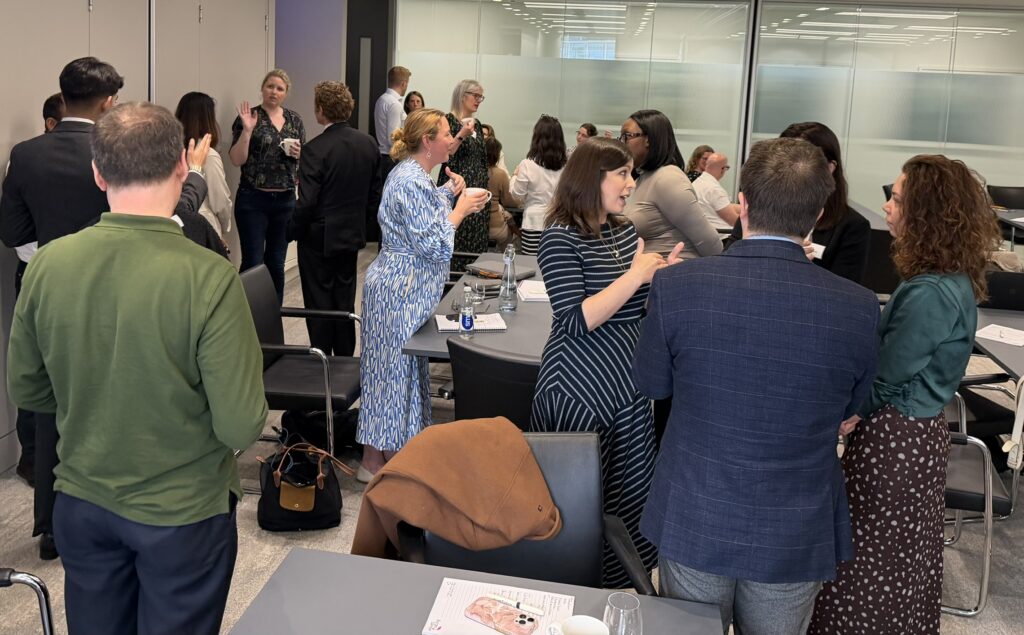
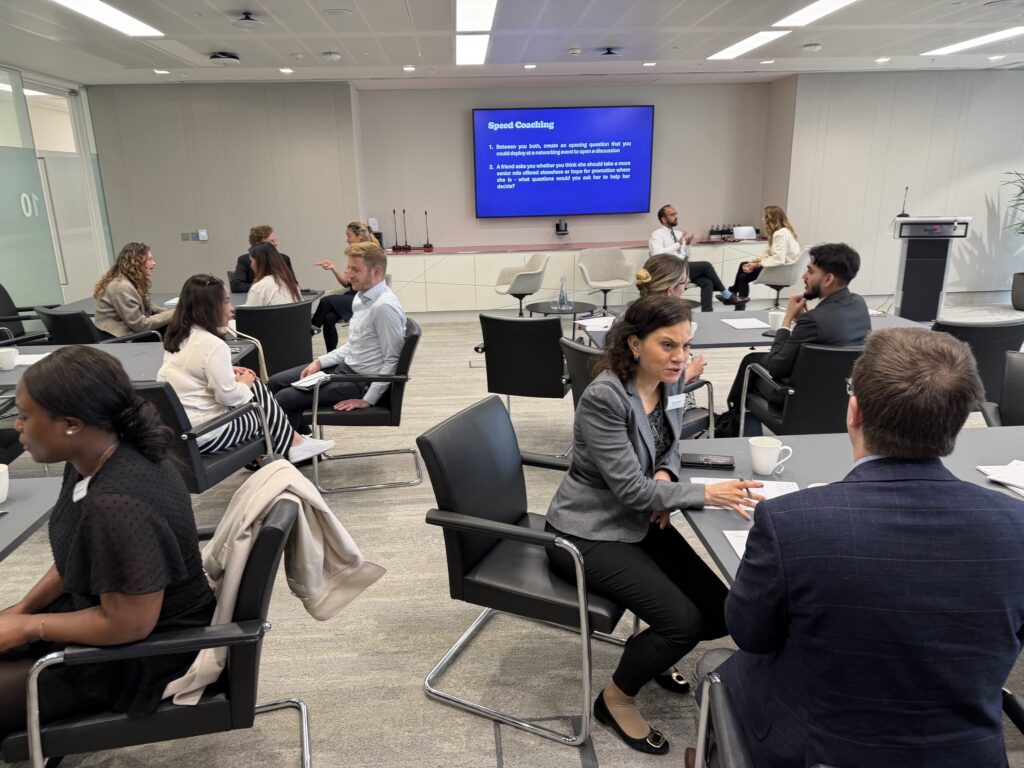
The morning closed with a speed coaching session led by Eve Read from the Pensions Equity Group, built around a simple instruction: find someone you haven’t spoken to yet today, and bring something you’re genuinely working through. Pairs chose from a menu of prompts — a challenge, a dilemma, a decision — or worked together to construct an opening question useful in any networking context.
The format quietly demonstrated everything the panel had argued for. Psychological safety came from choosing your partner and your question. Listening came from the structure of the exchange — one person’s challenge, the other’s curiosity, no pressure to resolve. One participant found herself walking away with a specific methodology: start with data, have small conversations across levels of seniority, let the evidence build the case for change. She passed that insight on to her second partner, who was navigating a similar challenge.